
Edge-of-your-seat storytelling.
Meet Pamela Ungashick

A self-professed grammar and book geek, Pamela has spent a lifetime in love with words. After graduating from the University of Nebraska, she built a successful career as a journalist and corporate communications executive in Wyoming, Nebraska, and Missouri.
Now retired, she’s dedicated to writing fiction novels. Her debut, Somebody Knows, reflects Pam’s infatuation with dark characters and dysfunctional family dynamics.
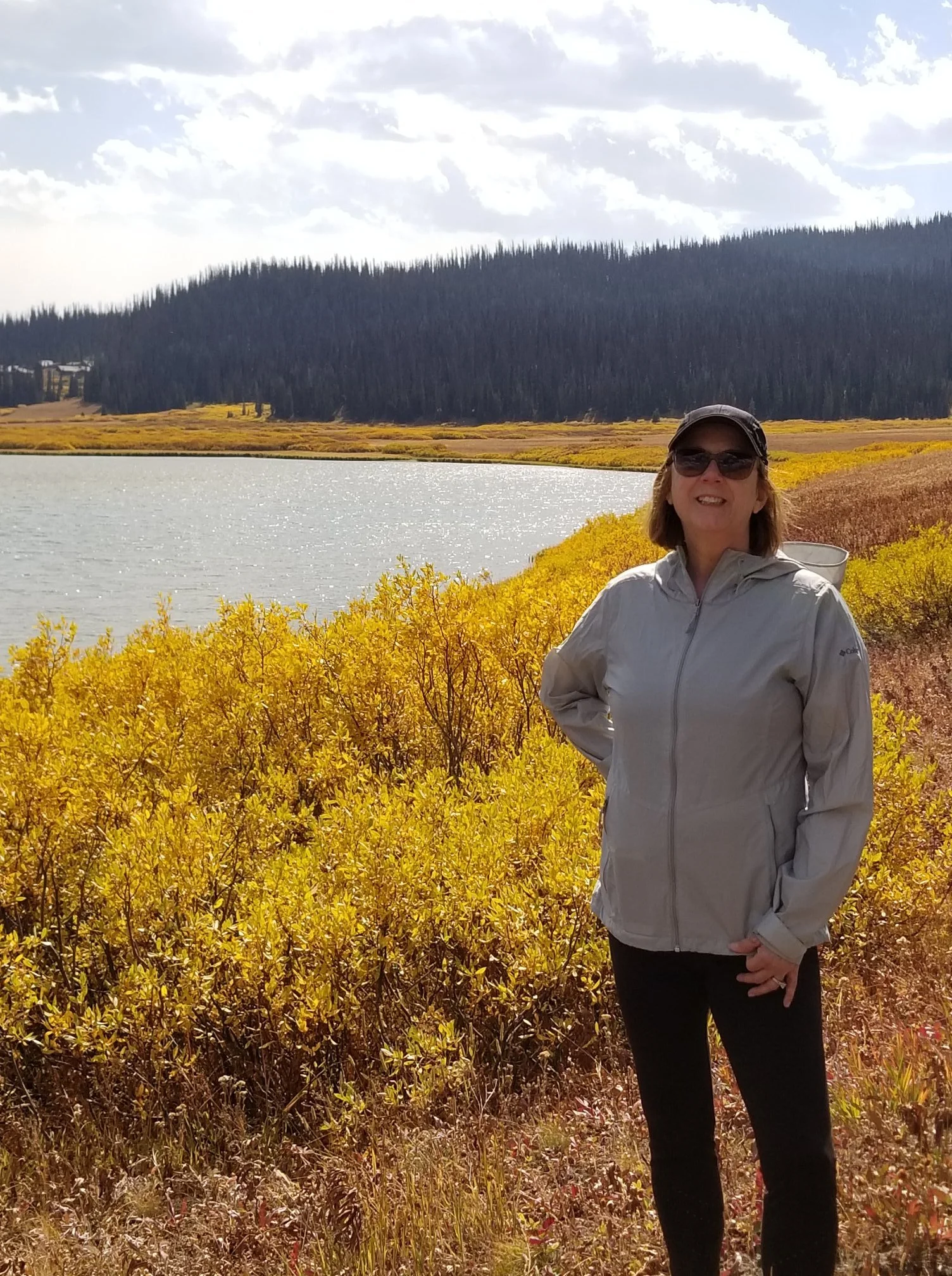
When she’s not at her keyboard, Pam is an avid reader. She enjoys traveling with her husband, Mark, strolling through museums and historic cities, and hiking. Admittedly, her favorite times are spent with her children and their growing families.
Pam and Mark live in Missouri and Montana with their two dogs, Dublin, and Keeley.
University of Nebraska Interview: Pamela’s Path to Becoming an Author
Q&A with Pamela
Tell us a little about your work.
I write the kinds of novels I most enjoy reading: psychological thrillers, suspense, and dark women's fiction—which simply means a focus on emotional journeys. My stories are driven by complex characters, emotional stakes, and the problems that arise when people keep dark secrets. Conflict is always at the core. I also enjoy weaving in themes that explore human nature and the challenges people face.
What inspires your stories?
I mostly rely on real events in my life or others' lives to develop story ideas—then twist those realities to create a fictional story. A place where I’ve lived or know well, like Illinois or Nebraska, might become the setting. I think about people I've met, too, and sometimes create a version of them. The more questionable the character, the darker the story becomes. And I like to write about the dark side of people.
Your novels seem to explore family secrets and hidden truths. Why are you drawn to those themes?
Because they're universal. Readers can relate in one way or another. Every family has stories and secrets that shape them. I'm interested in what happens when secrets come out, or when relationships are tested. Those emotional conflicts naturally lend themselves to suspense.
Your novels are suspenseful, but they're also deeply emotional. How do you balance those two elements?
For me, the emotional journey is just as important as the mystery. A shocking twist only matters if readers care about the people it affects. I strive to create complex, relatable characters whose choices, relationships, and struggles feel authentic. The suspense grows naturally from those emotional stakes, allowing the mystery and the characters' personal journeys to strengthen one another. My hope is that readers not only race to uncover the truth but also find themselves thinking about the characters long after they've turned the final page.
How did you get the idea for Somebody Knows?
Somebody Knows grew out of stories my mother shared over the years about growing up in a small town in the 1940s. Families are complicated, and even more so when you add poverty, desperation, revenge, and deeply troubled personalities. I wanted to explore how one person's obsession could affect an entire family and the era's unwritten rule: "Don't get involved in someone else’s business."
What’s the story behind All We Keep Buried?
The idea for All We Keep Buried started with a question I couldn't shake: What if a man from my own past turned out to be a killer? I began imagining the woman who actually married him—a shy Korean woman growing up in an overwhelmingly white community in western Nebraska. What would years of emotional control do to her confidence? How would she see herself? More than anything, I wanted to write about her finding the courage to stand up for herself and finally find her voice.
The story was also shaped by my own experiences. I lived in Nebraska during high school and college, and after graduating I worked for a small-town newspaper. I wanted to revisit that world—the influence of local media, the power a newspaper publisher could have in a small community, and the way public opinion could be shaped long before social media. I also wanted to set the story in the late 1990s, when there was no Amber Alert system and communication between law enforcement agencies was far less coordinated, creating opportunities for mistakes, misunderstandings, and manipulation.
Another inspiration came from my time as a journalist. While researching the Cold War, I visited abandoned missile silos in western Nebraska. I've never forgotten those lonely, haunting places, and years later they became an important setting in the novel.
At its heart, though, All We Keep Buried is about family. I wanted to explore a woman whose relationship with her adult son means everything to her, yet she can't understand why he's pulling away. Her determination to save that relationship—and her willingness to risk everything to uncover the truth—became the emotional heart of the story.
What do you hope people feel after reading All We Keep Buried?
More than anything, I hope readers close the book thinking about the quiet courage it takes to face painful truths instead of hiding from them. I hope they remember that ordinary people are capable of extraordinary bravery, that healing often begins with honesty, and that the truth has a way of finding its way to the surface—no matter how deeply it's been buried.
Do you fully plot your novels before you begin writing?
Like many authors, I've learned I'm somewhere between a plotter and a pantser. For months, I create detailed backstories for every character so I know how they will authentically speak, react, and behave. Then I plot the general story outline—how the story begins, the main conflicts, and a loose ending.
For Somebody Knows, I wrote each chapter with only a vague idea of where it was leading. For All We Keep Buried, I developed short paragraphs to outline each chapter ahead of time, but I found it hard to stick to. The characters have a way of directing the story as I write, and I've learned to follow their lead.
You retired from a career in corporate communications. How is writing fiction different?
Both careers involve writing, but corporate communications is much more collaborative. I worked with teams to write speeches, develop presentations, and promote organizations and their missions. Writing a novel is a solitary experience, and one that requires patience. It's a long process of writing, rewriting, researching, and polishing until every scene serves the story. Luckily, in retirement, I have time to write every day.
What have readers said about your work?
I'm honored that Somebody Knows has received several national awards, and the reviews on Amazon and Goodreads have been wonderful. Hopefully I’ll have the same result with All We Keep Buried! But one of my favorite parts of being an author is meeting with book clubs and hearing their thoughts. People tell me they can vividly picture the people and places in my novels and that the pacing keeps them turning pages late into the night. Hearing that someone "couldn't put it down" is one of the best compliments a writer can receive.
What's next?
I'm currently working on my third psychological suspense novel, another story that explores how the past continues to shape the present. And of course, there might be a murder or two.
Questions? Comments?
Wish to schedule Pamela for a book club meeting?
She’d love to hear from you.
Contact Now